I Am Successful On Paper
Ataxia is a Greek word for “Lack of Order”. Our mission is to bring some order with Ataxia awareness.
As part of the Ataxia Aware project, we are sharing personal accounts of those with Ataxia or other rare conditions. We want to provide a safe space for people to talk about their experience with disability, whether themselves or someone close to them.
I live in Berlin. I am married to the person I love. I have a career that has given me opportunities I once dreamed about. I own my apartment and have built a life I am proud of. From the outside, everything appears to be unfolding exactly as it should.
If you looked only at my résumé, my LinkedIn profile, or the milestones I’ve reached by my mid-thirties, you would probably conclude that I have very little to worry about.
On paper, those milestones tell the story of a life moving forward. They just don’t tell the whole story.
Every morning, before I even open my eyes, there is a brief moment of silence. Then comes the same question.
What kind of day will today be?
Will I wake up feeling steady, or will dizziness arrive before my feet touch the floor? Will my walk to the train feel normal? Will every step require concentration? Will I make it through another day without anyone noticing the subtle adjustments I’ve taught myself to make? Or will today be the day my body refuses to cooperate?
Most people begin their mornings thinking about meetings, school runs, or what they will have for breakfast. I begin mine negotiating with my own body, trying to understand what it is willing to give me today.
I live with Spinocerebellar Ataxia Type 37, a rare hereditary neurodegenerative disease. There is currently no cure, and there is no treatment that can stop its progression. It slowly affects balance, coordination, speech, and eventually independence. Unlike an injury or an illness that arrives all at once, it changes your life so gradually that you often adapt before you even realise you’ve changed.
Perhaps that is what makes progressive diseases so difficult to understand. The transformation happens quietly. You do not wake up one morning as a different person. Instead, your world becomes a series of tiny adjustments that accumulate over months and years until one day you realise you no longer move, think, or plan your life in quite the same way.
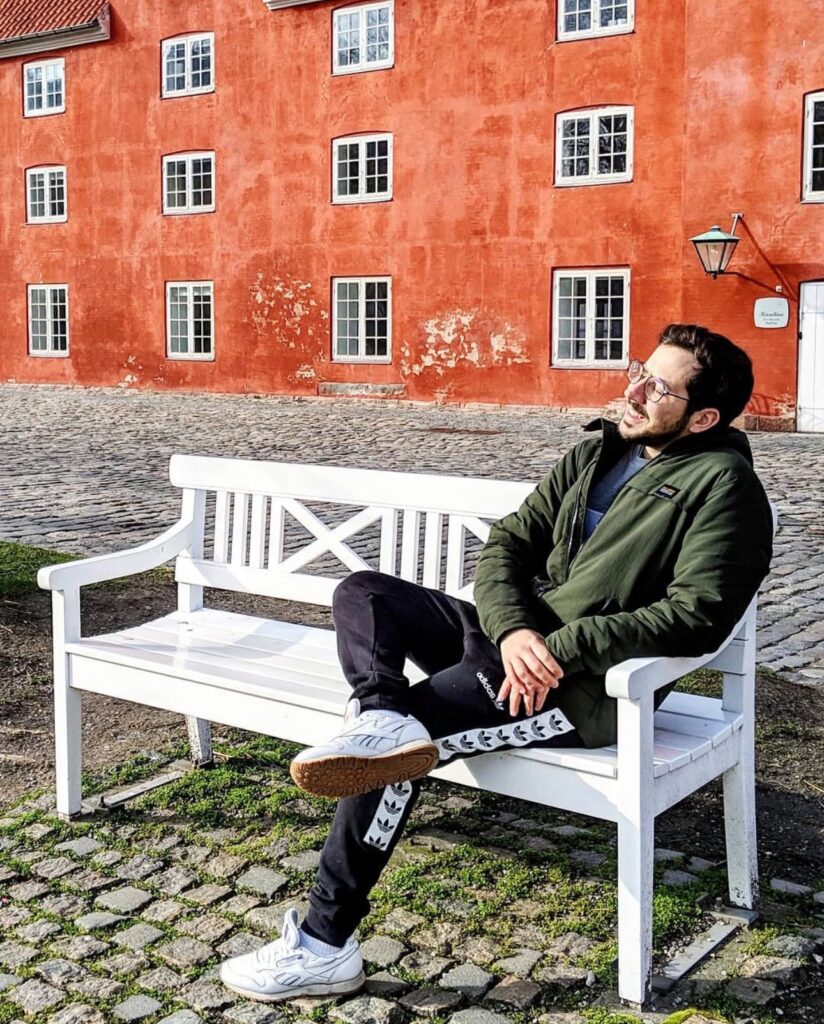
I still go to work every day. I lead meetings, present ideas, make creative decisions, and deliver projects I am proud of. I laugh with colleagues, make plans for the future and, to anyone watching, I probably look exactly like the ambitious professional they have always known.
Sometimes I joke with my colleagues that Charlottenburg is not really Berlin anymore. It’s basically Potsdam. They laugh because it’s an exaggeration. To them, it’s a joke about distance. For me, it isn’t really about distance at all.
A thirty-minute journey across the city carries far more than the inconvenience of getting from A to B. Long before I leave home, the journey has already begun. Will there be somewhere to sit? Will the train be crowded? Will I have to stand? Will the dizziness start? Will I feel steady enough to walk through the station? Will anyone notice if I don’t?
By the time I arrive, I often feel as though I have already completed the hardest part of my day, and all I have done is travel across the city.
That is what people cannot see. Sometimes the hardest part of living with a progressive neurological disease is not the physical effort. It is the constant anticipation of what might happen before anything has happened at all. As difficult as it is to live with a rare disease, learning how to navigate the healthcare system has, at times, felt like a second diagnosis.
When your condition is uncommon, you quickly discover that you cannot simply become a patient. You become your own advocate. You learn the language of medical journals, clinical trials, and off-label treatments, not because you want to, but because you are searching for answers that too often are not waiting for you in the consultation room.
I do not set out to become an expert on my own disease. I do it because I have to. I read medical papers, search clinical trial registries, follow emerging research, and walk into appointments prepared to ask about treatments that may help manage my symptoms. Not because I believe I know more than my doctors, but because when you live with a rare disease, you learn that no one has as much at stake in finding answers as you do.
What surprised me most was not only how little information there was, but how alone I felt after receiving my diagnosis. You are told that you have a progressive neurological disease. You are told there is no cure. You are told your future will change in ways nobody can predict. Then the appointment ends. Your neurologist has another patient waiting. The clinic carries on. The waiting room fills with new names. Life inside the hospital continues exactly as it should. Outside, yours has just changed forever. You leave carrying the weight of a conversation that will stay with you for the rest of your life, yet you are expected to somehow know how to carry it.
I remember thinking that someone had just told me my life would never be the same, yet nobody stopped to ask how I was coping with hearing those words. Nobody automatically referred me to a psychologist or someone trained to help me process what this diagnosis meant for my life, my marriage, my career, or the future I had imagined. The focus understandably remains on the disease itself. But living with a progressive illness is as much a psychological journey as it is a neurological one.
There is something profoundly lonely about that moment. The healthcare system has to keep moving, and I understand why. But I was still standing in the same conversation long after everyone else had left it. No patient should feel responsible for educating the very system they turn to for help.
People often associate grief with losing something that once existed. A loved one. A relationship. A home. A chapter of life that has come to an end. Those losses are visible. They leave behind photographs, memories, and stories that can be shared with others.
But there is another kind of grief that rarely gets spoken about because it leaves behind none of those things. It is quieter than that. It is the grief of futures that slowly disappear before you ever have the chance to live them.
I do not grieve running marathons because I never ran them. I do not grieve climbing mountains because I never climbed them. I do not grieve travelling the world without thinking about balance, fatigue, or whether my body will allow me to enjoy the journey.
What I grieve is the possibility. The quiet confidence that if one day I wanted to do those things, I simply could.
Most people move through life believing their future belongs to them. They assume tomorrow will offer more opportunities than today and that, if they dream of doing something, their body will be there when the time comes. Living with a progressive disease quietly changes that relationship with the future. Instead of asking what I want my life to look like in ten years, I sometimes find myself wondering what parts of it will still be available to me.
It is a strange kind of grief because you are not mourning memories. You are mourning possibilities. You miss places you have never been, experiences you have never had, and versions of yourself that may never have the chance to exist.
Those thoughts rarely arrive all at once. They appear in ordinary moments.
When friends excitedly plan a hiking holiday.
When my husband and I talk about places we would love to visit.
We postponed our honeymoon for what felt like all the right reasons. We had just bought our apartment and paid for our wedding, so waiting seemed like the responsible decision. We told ourselves there would always be another opportunity. Now, when we talk about where we should finally go, another question quietly enters the conversation: will we ever be able to? Not because we won’t find the time, but because I no longer know what my body will be capable of by then.
The same thought appears when I think about places that already mean something to me. Cities I’ve fallen in love with. Streets I’ve walked with friends. Beaches where time seemed to stand still. I don’t only wonder where I’d like to go next. I find myself wondering whether I’ll ever have the chance to go back.
Living with a progressive disease doesn’t only make you question what lies ahead.
Perhaps the hardest part is not wondering what you will lose tomorrow. It is wondering whether you have already experienced something for the last time without ever knowing it. That uncertainty changes more than plans. It changes the way you experience success.
Every promotion I celebrate exists alongside another neurological appointment. Every professional milestone is accompanied by another reminder that my brain is changing in ways no amount of determination, discipline, or optimism can control. It is possible to feel genuinely proud of how far you have come while quietly wondering how much longer your independence will remain entirely your own.
From the outside, people often tell me I am handling everything remarkably well.
Maybe I am.
What they do not see is that continuing does not always feel brave. Sometimes it simply feels like the only option.
It is replying to emails after spending the morning wondering whether my symptoms have changed. It is leading meetings while silently calculating whether anyone has noticed my balance or my speech. It is making plans months or years into the future while knowing that my body is quietly making plans of its own.
The hardest part is that almost none of this looks like disability. We often recognise disability only when it becomes visible, when it changes the way someone walks, speaks, or moves through the world. But for many people with progressive neurological diseases, disability begins long before anyone else can see it. It begins in the constant calculations, the adjustments nobody notices, and the energy spent making sure the world never has to.
By the time other people recognise what has changed, you have already spent years adapting.
I do not share my story because I want sympathy. I share it because invisible illnesses deserve visible conversations. Because there are countless people who appear successful while carrying realities that never make it onto a résumé. Because there are people leaving neurology appointments every day with life-changing diagnoses, walking back into the world expected to somehow continue as though nothing has happened. And because there are others quietly grieving futures that have not yet disappeared, but no longer feel guaranteed.
None of this means that I do not have a good life.
I do.
I have a marriage I cherish. I have work that gives me purpose. I have family and friends who love me. I laugh, I make plans, and I still find joy in ordinary moments.
What has changed is not my ability to feel happiness. It is my relationship with it.
Happiness now exists alongside fear. Gratitude exists alongside grief. Hope exists alongside uncertainty. Some days those emotions sit quietly beside one another. Other days they compete for every thought before I have even left my bed.
Living with a progressive disease has taught me that joy and sorrow are not opposites. They are often companions. Loving your life and grieving your future are not contradictions. Sometimes they are simply two truths that learn to exist in the same heart.
Perhaps that is what I wish more people understood.
The hardest part of living with a progressive disease is not only what it takes away. It is that, while the world sees someone successful, independent, and moving forward, there is another life unfolding quietly beneath the surface. It is a life filled with invisible negotiations, unanswered questions, constant adaptation, and a grief for futures that may never have the chance to become memories.
If you ask me how I am, I will probably tell you I’m fine. And most days, that answer is true.
I still laugh. I still love. I still make plans. I still dream about the future. The difference is that I now understand something I never had to think about before.
A person can build a beautiful life while quietly mourning another one. Those two truths can exist at exactly the same time.
I am successful on paper.
The rest of my life simply does not fit on paper.

Written by: João Gaié
Edited by: Aneurin Read
We would like to thank João for sharing his inspirational story with us. If you would also like to get involved and share your experience with Ataxia or another rare condition, please get in contact with us through our social media channels or our email.
If you would like to know more about João, you can follow them on Instagram and find them on substack