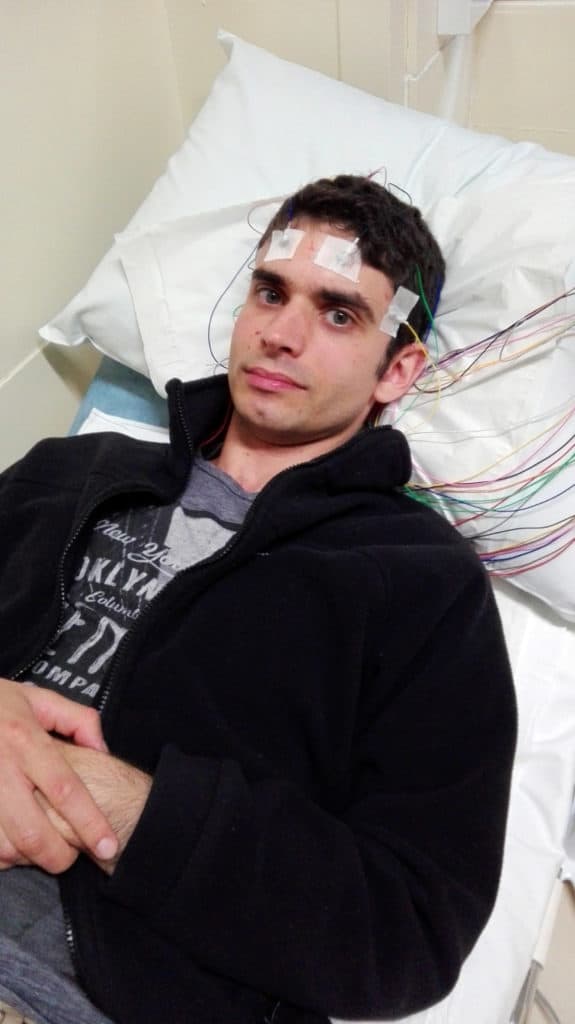
I have a condition for which, as yet, there is no cure. It’s called Cerebellar Ataxia, a condition that primarily affects balance and speech. For a while now, the hospitals have been running various SCA (Spinocerebellar Ataxia) tests to try and pinpoint which specific type it is. Nothing definitive yet.
It began at 32 years old, when one night I bizarrely fell out of bed and the following morning could not remember a thing about what had happened, except for pulling my bed linen back onto the bed.
Before this moment, I had been leading a bright, eventful life. I’d worked in a variety of schools and kids camps, both in the United States and England. I’d travelled pretty much all over the world and life was good. Spinocerebellar Ataxia doesn’t stop you enjoying life, but it changes how you live profoundly.
You need to plan more, keep a track of your medical appointments. Simple things are more of a challenge; they take longer. But with planning and an adventurous spirit, there’s still a world to see and plenty to do.
Sometimes I feel, when I jolt forward and my forearms go up, like a T. Rex. Perhaps it has something do with watching Jurassic Park at nine or ten years of age. Spinocerebellar Ataxia means your body no longer does precisely what you want it to do. It’s an odd feeling and it takes some getting used to.
Occasionally when walking, I have the feeling of being drunk, perhaps because I see other people’s reactions to me moving unsteadily. I now walk with two Nordic Walking Poles (recommended by a neuro-physiotherapist), giving me a much more secure, measured step, which will hopefully put a stop to that.
On the whole, I try not to think about having an unsteady walk and often it works. But there are always the other times. I will see people in their seventies, or even eighties, walking past me. That’s not a great feeling to be honest. I often think to myself I am not even half their age and they’re walking faster than me.
Hearing laughter as I slowly walk past a group of adolescents is another thing that feels bad or hearing the muttered word “clumsy”. I would like to say something but there’s no arguing with ignorance. In any event, as the saying goes, it says a lot more about them than it does me.
No, it’s not easy at times living with Spinocerebellar Ataxia. But I always remind myself that there are many millions of people around the world far worse off than me. You cannot always control what issues life deals you, but you can control how you react to them.
My ataxia has progressed further now. I haven’t been able to go anywhere by myself with my mum and her partner driving me wherever I need to go. My speech has gotten worse, so I now have a speech and language therapist come to the house.
Now I am unable to walk and I speak only a little. However, I am adjusting to this new challenge in a determined fashion and I consider myself to be very lucky, not least because I am surrounded by family who are there to help whatever I need.